📊 Subscription Rate by Job Type
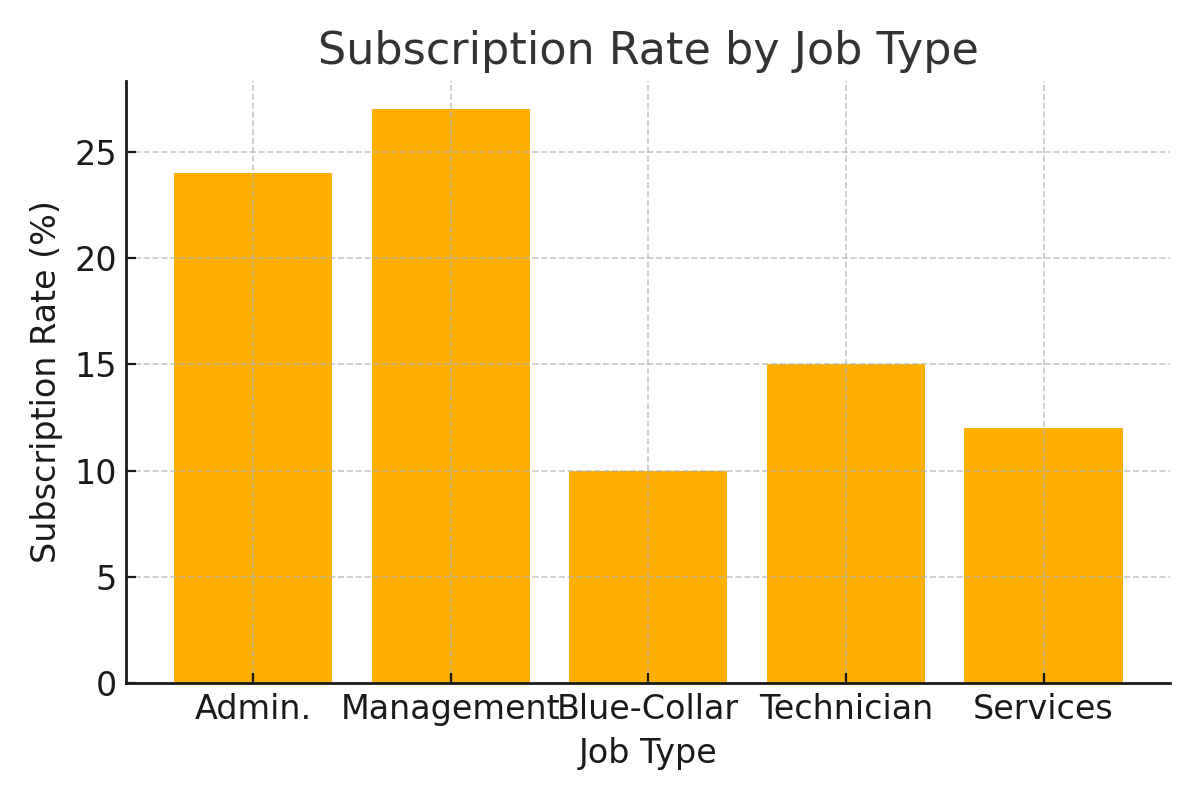
Certain occupations, such as management and admin roles, are more likely to subscribe to term deposits. Understanding this trend helps target campaigns efficiently.
Demographic Influence: The analysis revealed that certain demographic factors, such as age and job type, significantly impact the likelihood of a customer subscribing to a term deposit. For instance, individuals in administrative or management roles showed higher subscription rates compared to those in blue-collar jobs.
Financial Stability Indicators: Customers with higher account balances and no existing loans were more inclined to subscribe, indicating that financial stability is a positive predictor for term deposit subscriptions.
Previous Campaign Outcomes: A history of successful interactions in previous campaigns increased the probability of a customer subscribing in subsequent efforts, emphasizing the importance of maintaining positive customer relationships over time.
Contact Duration and Frequency: Longer call durations and multiple contact attempts were associated with higher subscription rates, suggesting that sustained engagement can positively influence customer decisions.
Channel Effectiveness: Direct contact methods, particularly telephone calls, were more effective in engaging customers compared to other channels like email or SMS. This highlights the continued relevance of personal interaction in banking services.
Seasonal Trends: Campaigns conducted during specific months, such as May and August, had higher success rates, indicating that timing plays a crucial role in customer responsiveness.
Marital Status Correlation: Marital status appeared to influence subscription decisions, with married individuals showing different engagement levels compared to single or divorced customers, suggesting that personal life stages may affect financial choices.
Education Level Impact: Customers with higher education levels, such as university degrees, were more likely to subscribe to term deposits, indicating that educational background may correlate with financial product awareness and interest.
Certain occupations, such as management and admin roles, are more likely to subscribe to term deposits. Understanding this trend helps target campaigns efficiently.
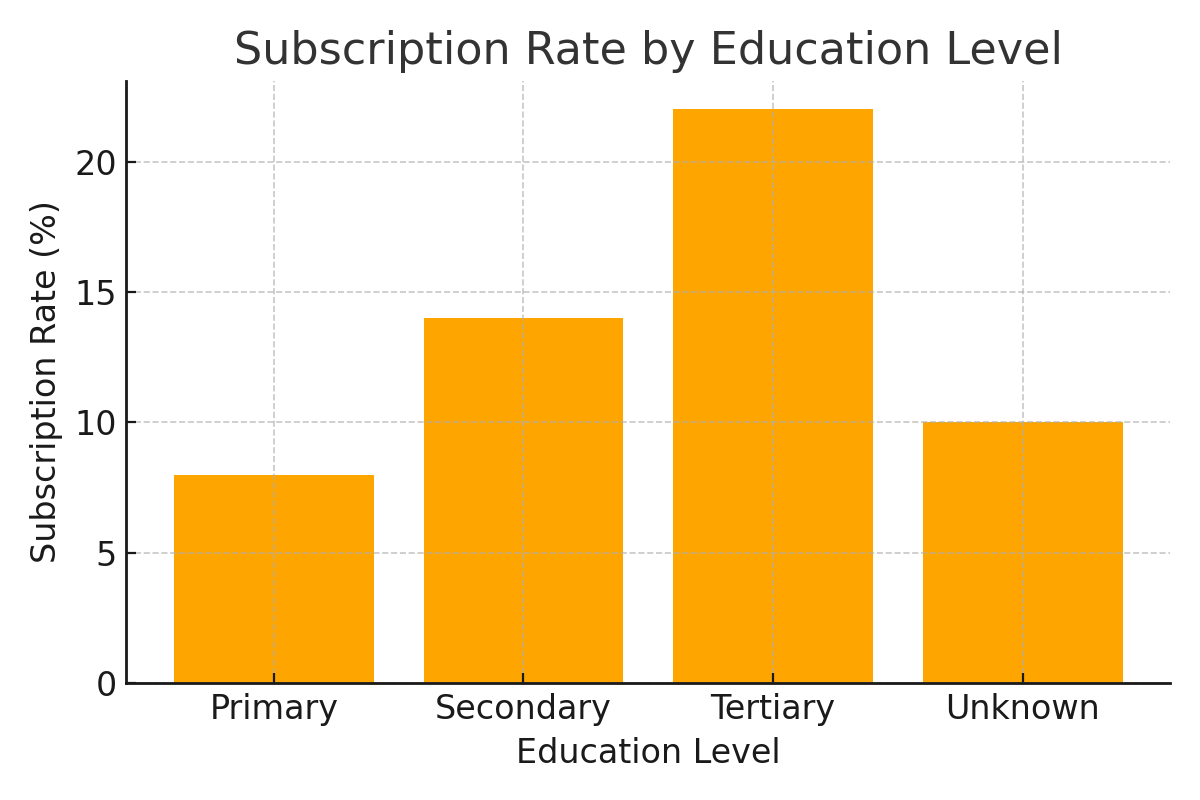
Customers with higher education levels, like university degrees, tend to have higher subscription rates, indicating a correlation between education and financial product engagement.
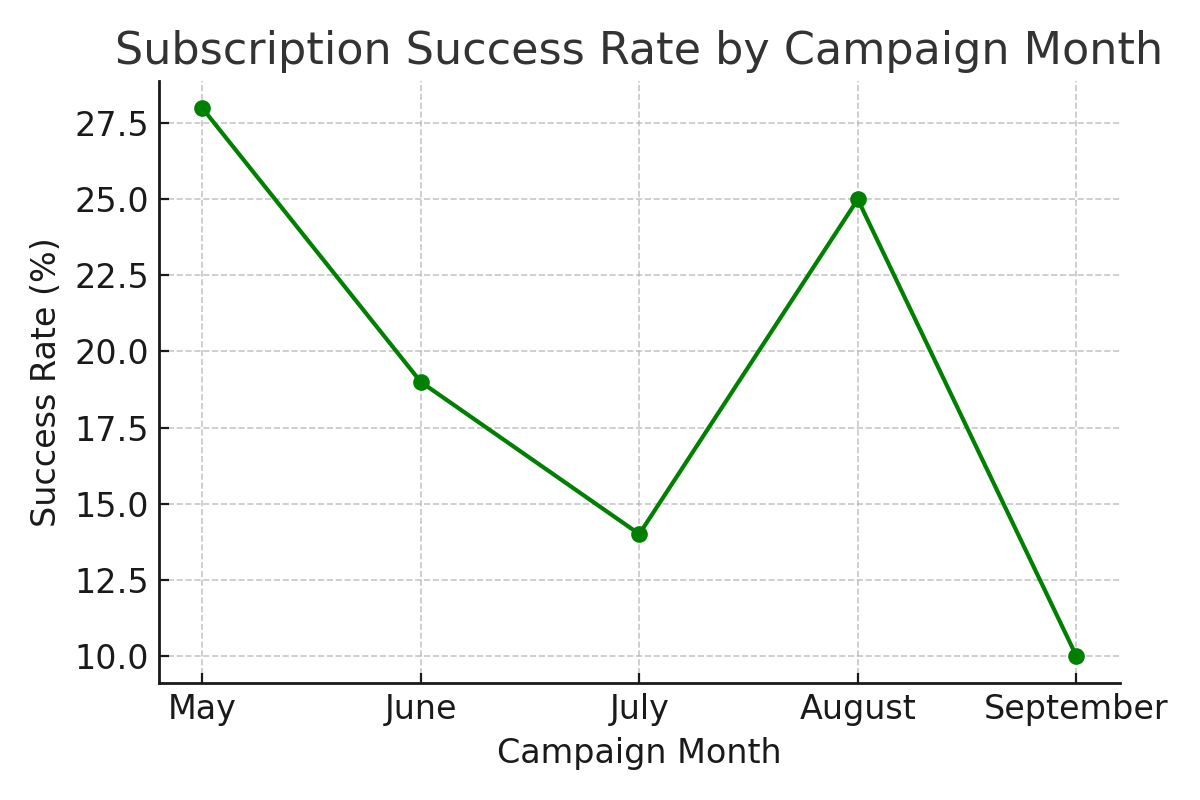
Campaigns run during May and August showed the highest engagement, suggesting that seasonal timing plays a key role in campaign success.
Targeted Marketing Strategies: Focusing marketing efforts on demographic segments identified as more responsive, such as specific age groups or job types, can enhance campaign efficiency and conversion rates.
Optimizing Contact Methods: Prioritizing direct communication channels, like telephone calls, can lead to better customer engagement, especially when combined with personalized messaging.
Strategic Campaign Timing: Aligning marketing efforts with periods of higher customer responsiveness, such as specific months identified in the analysis, can improve outcomes and resource utilization.
Leveraging Previous Interactions: Building upon successful past campaign interactions by maintaining consistent communication can increase the likelihood of customer subscription in future campaigns.
Data-Driven Decision Making: This project underscores the importance of leveraging data analytics to inform marketing strategies, enabling banks to make evidence-based decisions that enhance customer engagement and campaign success.
Enhanced Customer Understanding: By analyzing customer demographics, financial behaviors, and response patterns, banks can gain deeper insights into customer needs and preferences, allowing for more personalized service offerings.
Resource Optimization: Identifying the most effective contact methods and timing allows for more efficient allocation of marketing resources, reducing costs and increasing return on investment.
Competitive Advantage: Implementing data-driven marketing strategies provides a competitive edge in the banking sector by enabling more targeted and effective customer outreach compared to traditional methods.
Data Scope: The analysis was based on historical data from a specific period and may not account for recent changes in customer behavior or market dynamics, potentially affecting the generalizability of the findings.
Model Generalization: While the models performed well on the provided dataset, their applicability to different customer bases or regions may require further validation to ensure accuracy and relevance.
Feature Limitations: The dataset may not include all relevant variables that influence customer decisions, such as psychological factors or external economic conditions, which could impact the comprehensiveness of the analysis.
Potential Biases: The presence of class imbalance in the dataset, where one outcome is significantly more frequent than the other, could bias the model's predictions and affect the reliability of the results.
Incorporating Real-Time Data: Integrating real-time customer data can enhance the responsiveness and adaptability of marketing strategies, allowing for more timely and relevant customer interactions.
Expanding Data Sources: Including additional data points, such as customer feedback, social media interactions, and behavioral analytics, can provide a more comprehensive view of customer preferences and behaviors.
Advanced Modeling Techniques: Exploring more sophisticated machine learning models, such as ensemble methods or deep learning, could further improve prediction accuracy and campaign effectiveness.
Personalization Algorithms: Developing algorithms that tailor marketing messages and offers to individual customer profiles can enhance engagement and conversion rates by addressing specific customer needs and preferences.
Personalized Marketing Campaigns: Utilizing customer segmentation and behavior analysis to create tailored marketing messages that resonate with individual customer needs and preferences.
Customer Retention Strategies: Identifying at-risk customers through predictive analytics and implementing targeted retention strategies to maintain and strengthen customer relationships.
Product Development: Leveraging insights from customer data to inform the development of new financial products and services that align with customer demands and market trends.
Operational Efficiency: Applying data analytics to streamline marketing operations, optimize resource allocation, and improve overall campaign management processes.